Understanding 303 Stainless Steel Plate: Properties and Applications
Release time:
2026-01-14
303 stainless steel plates are a popular choice in the metallurgical and energy sectors due to their excellent machinability and corrosion resistance. Composed primarily of iron, chromium, and nickel, 303 stainless steel is an austenitic alloy that offers superior mechanical properties, making it suitable for various applications. One of the standout features of 303 stainless steel is its ease of
One of the standout features of 303 stainless steel is its ease of machining. This material contains sulfur, which enhances its machinability compared to other stainless steel grades. This property is particularly beneficial in industries that require precision components and the efficient production of complex shapes. As a result, manufacturers often select 303 stainless steel plates for applications where tight tolerances are essential.
In terms of corrosion resistance, 303 stainless steel performs well in environments exposed to moisture and air. It is capable of withstanding a range of corrosive agents, thereby ensuring longevity and durability in various applications. However, while 303 stainless steel is resistant to rust and oxidation, it is not recommended for environments that are constantly exposed to chlorides or saline conditions, as these can lead to pitting corrosion over time.
The mechanical properties of 303 stainless steel plates are another strong point. They exhibit good strength and toughness, combined with a reasonable level of ductility. This makes them suitable for applications requiring components that can withstand mechanical stress and deformation without fracturing. Industries commonly utilizing 303 stainless steel include automotive, aerospace, and food processing, where hygiene and resistance to wear are critical.
When it comes to fabrication, 303 stainless steel plates can be easily welded, although it's essential to follow proper techniques to maintain their structural integrity. It's recommended to use filler materials compatible with the grade to ensure optimal weld quality. Additionally, post-weld treatments may be necessary to minimize the risk of corrosion at the weld joints.
In summary, 303 stainless steel plates are a versatile option for many industries due to their excellent machinability, corrosion resistance, and favorable mechanical properties. By understanding these characteristics, businesses in the metallurgy, mining, and energy sectors can make informed decisions about the best materials for their specific applications, ensuring efficiency and durability in their operations. Whether for manufacturing processes or component production, 303 stainless steel remains a reliable choice.
Latest News
Understanding 303 Stainless Steel Plate: Properties and Applications
303 stainless steel plates are a popular choice in the metallurgical and energy sectors due to their excellent machinability and corrosion resistance. Composed primarily of iron, chromium, and nickel, 303 stainless steel is an austenitic alloy that offers superior mechanical properties, making it suitable for various applications. One of the standout features of 303 stainless steel is its ease of
2026-01-14
Transforming Spaces: The Aesthetic Appeal of Galvanized Corrugated Roof Sheets
How Galvanized Corrugated Roof Sheets Enhance Aesthetic Appeal Introduction to Galvanized Corrugated Roof Sheets Galvanized corrugated roof sheets are becoming increasingly popular in the construction and decoration materials industry. Crafted from steel and coated with a protective layer of zinc, these sheets offer a unique blend of functionality and aesthetics. They are not only durable but also
2026-01-12
The Versatility and Benefits of Color Coated Galvanized Steel Sheets in Construction
Color coated galvanized steel sheets are increasingly becoming a preferred material in the construction and decoration industries, primarily due to their enhanced aesthetic and functional properties. These sheets are produced by applying a layer of color paint over galvanized steel, which not only provides a visually appealing finish but also enhances the material's resistance to corrosion and wea
2026-01-10
The Role of Prepainted Galvanized Steel Coil in Sustainable Building Practices
The Role of Prepainted Galvanized Steel Coil in Sustainable Building Practices Table of Contents Introduction to Prepainted Galvanized Steel Coil Understanding Sustainability in Construction Key Benefits of Prepainted Galvanized Steel Coil Applications of Prepainted Galvanized Steel Coil in Sustainable Building Environmental Impact of Prepainted Galvanized Steel Comparison
2026-01-08
Understanding the Benefits and Applications of Hot-Dip Galvalume Steel Sheet in Construction
Hot-dip galvalume steel sheet is a revolutionary material that combines the benefits of both aluminum and zinc, making it an ideal choice for various construction and architectural applications. The process of hot-dip galvanization involves coating the steel substrate with a mixture of aluminum and zinc, which creates a durable barrier that offers superior corrosion resistance. This characteristic
2026-01-06
Understanding 304L Stainless Steel Bar: Properties, Applications, and Benefits
304L stainless steel bars are an essential material in various applications, particularly in the metallurgy and energy sectors. This low carbon version of 304 stainless steel boasts excellent corrosion resistance, making it a preferred choice for industries that require durability and longevity in harsh environments. One of the standout features of 304L stainless steel is its low carbon content, w
2026-01-02
CONTACT US
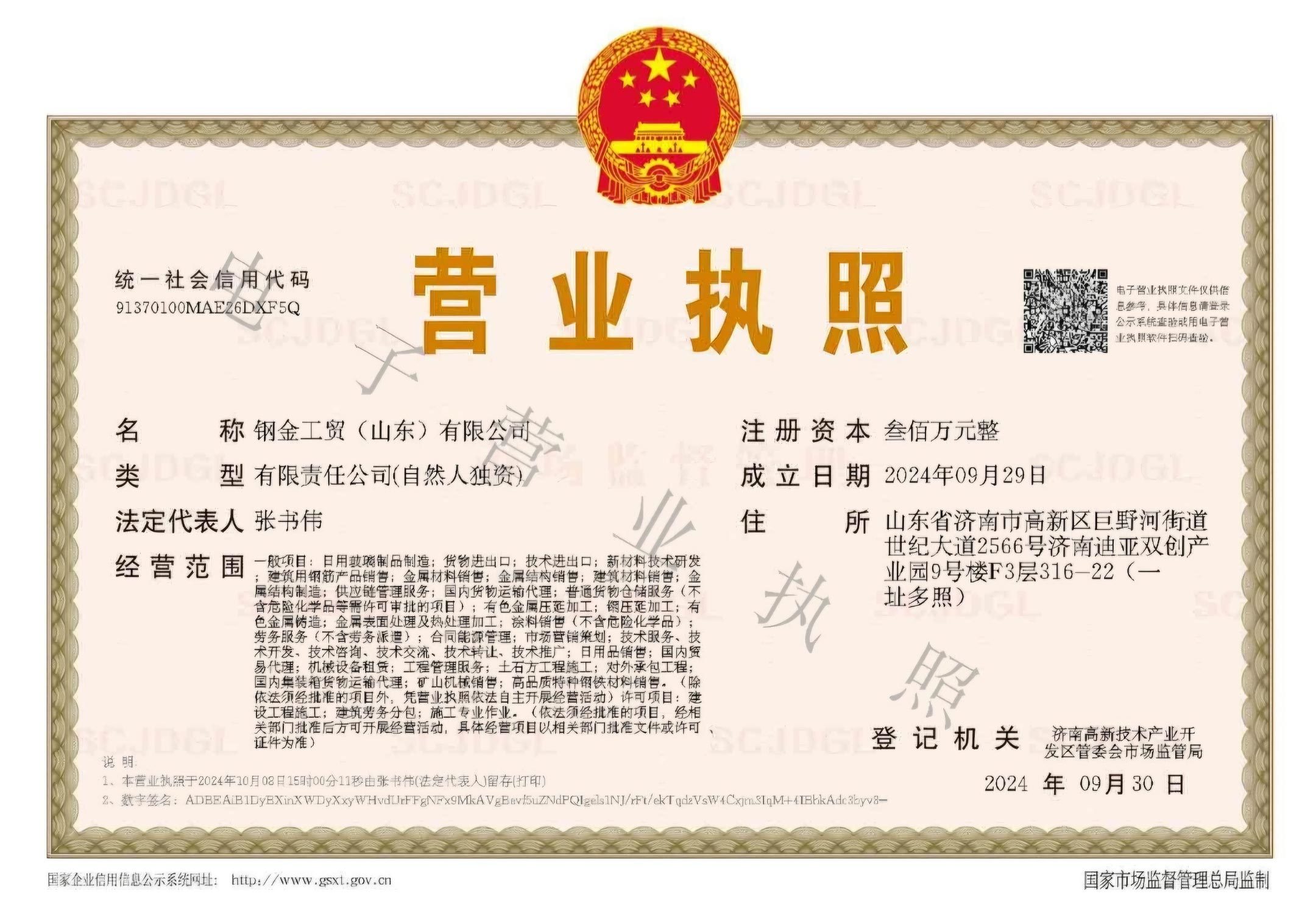
Add:316-22 F3 Floor, Building, Building, No. 9, Jinan Dia Shuangchuang Industrial Park, No. 2566, Jinan Century Avenue, Jihino Street, Jinan City, Shandong Province

GET A FREE QUOTE
Copyright : Steel Gold Industry and Trade Shandong Co., Ltd. Powerby : 300.cn jinan2 Seo Tags BUSINESS LICENSE